Mostly Dead Is Not All Dead
I wish I could sit every sincere Christian down—coffee in hand—for a long, honest conversation with Paul's letter to the Romans. Not a casual read, but a reckoning. Paul didn't jot chaptered notes; he wrote a single letter meant to be heard as one unbroken argument.
At minimum, take Romans 4–8 (better yet, 1–11) in a single sitting. Don't treat each chapter as if Paul wrote in pieces. Slow down. Follow the connective tissue—"therefore," "so then," "for." Pause at each comma and ponder with every period. Let each line confront you like a mirror that refuses to lie.
Because here's the problem:
we've mistaken chapter-a-day reading for serious study,
then wondered why our faith feels thin.
We talk about grace, we sing about victory, and yet many of us—myself included—have lived as though sin still holds the deed to our bodies. We fight it, we fear it, we limp beneath it, forgetting that Romans 6 doesn't describe a battle; it declares a burial.
And to make matters worse, when Paul does describe a battle, we mistake it for the normal Christian life because we didn't follow his logic the way he built it.
Paul isn't offering coping strategies.
He's reading a eulogy.
And the corpse? It's the old you.
But somewhere along the way, we started whispering a softer gospel.
Even some of the greats seemed to soften this point.
Charles Spurgeon once quoted a friend who said, at age eighty,
"I find the old man is not dead yet."
And Spurgeon, in his usual warmth and humility, agreed:
"Our old man is crucified, but he is long a-dying."
Now, I revere Spurgeon—he's one of the brightest lights in the history of preaching—but even bright lights can cast long shadows. This is one of them. Not heresy, but a sentimental error—a beautiful thought that simply stops one verse too soon.
Because Romans 6 doesn't hesitate. It doesn't hedge.
It says, with grave simplicity: "Our old man was crucified with Him."
Not "in process." Not "still struggling."
—Was.
Past tense. Finished event.
Paul then makes the most incredulous of claims, as if daring us to take him at his word:
"For he that is dead is freed from sin."
Not "will be." Not "metaphorically."
—Is.
Present tense. Ongoing reality.
And as if to hammer the nails deeper into the old man's coffin, Paul presses the point again and again, each phrase a mirror to the last—Christ on one side, you on the other:
He died unto sin once;
you, likewise, reckon yourself dead indeed unto sin.
He lives unto God;
you, likewise, reckon yourself alive unto God through Christ.
Death has no more dominion over Him;
therefore sin shall not have dominion over you.
Paul isn't offering cute poetry here—he's drawing a line of symmetry so perfect it should leave us stunned:
Christ's death is your death.
Christ's life is your life.
The dominion that lost its claim on Him lost its claim on you.
This isn't metaphor—it's math.
Divine equivalence.
The ledger of sin balanced once and for all.
⸻
And that's when I hear it—
the voice of Miracle Max, waving his finger from The Princess Bride:
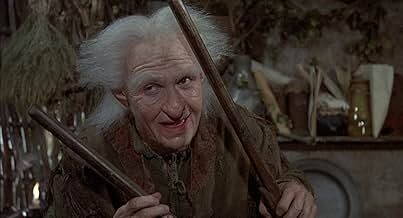
"Woo-hoo-hoo! Look who knows so much!
Well, it just so happens that your friend here is only mostly dead.
There's a big difference between mostly dead and all dead."
Mostly dead.
That's how too many believers live—half-buried saints still arguing with corpses.
We nod to the cross but keep the casket cracked open—just in case.
But Paul leaves no wiggle room, no space to insert "mostly" into his argument:
If we were only mostly dead, then Christ was only mostly crucified.
And a mostly crucified Christ can't raise anyone from the grave.
He died—completely.
So did we, in Him.
The math is divine and final:
His death equals your death.
His resurrection equals your freedom.
If Christ is fully risen, then you are fully free.
Not will be, but even now is.
So stop negotiating with a corpse.
Stop trying to rehabilitate what God already buried.
Romans 6 isn't asking for effort; it's demanding belief.
Dead men don't struggle to be free.
They are free.
So go read Romans 6—slowly, stubbornly, like your soul depends on it.
Because it does.
And remember, next time the old man starts whispering from the grave,
just smile, lean in, and say,
"Woo-hoo-hoo! Look who knows so much!"
Then shut the coffin.